
Browse our complete product lineup and find the right solution.

Home | Extension Springs

Extension Springs

Close-Wound Custom Extension Springs, Engineered for the Pull

CNC Close-Wound Coiling

Custom Extension Springs with Built-In Tension

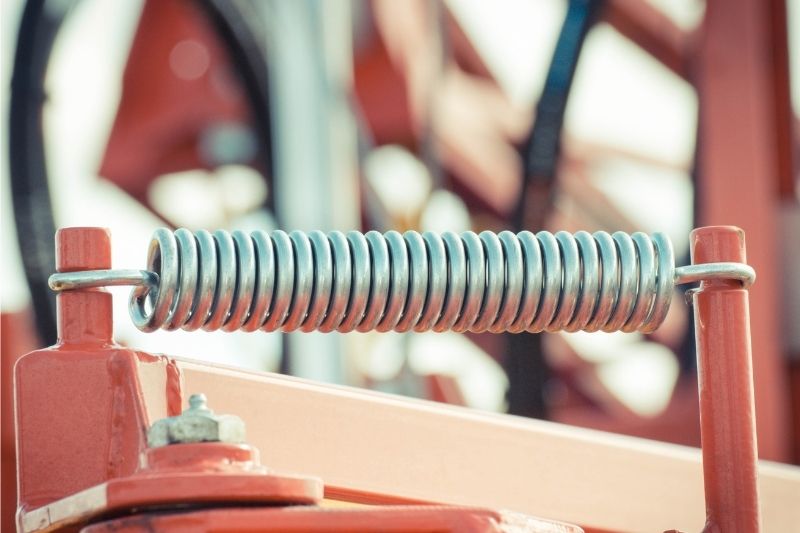
The close-wound design of extension springs allows them to absorb and store energy and provides the ability to exert a pulling force between two mechanisms. That makes them a popular choice for garage door assemblies, medical devices, farm machinery, carburetors, OEMs, and many other applications.

Using our CNC spring coiling machines, we manufacture custom extension springs with wire diameters from 0.005″ to 0.250″ in a wide range of materials — including stainless steel grades suited for demanding environments.

Extension Spring
Wire Diameter

0.005″ – 0.250″

Across all materials

Hook Configurations

5 Standard Types

+ Custom-shaped hooks

Equipment

CNC Spring Coilers

In-house tooling

Certification

ISO 9001:2015

PPAP · SPC

Hook End Configurations

Choose from five standard hook styles — or specify a custom shape to match your assembly
Coil Springs

Side Hooks

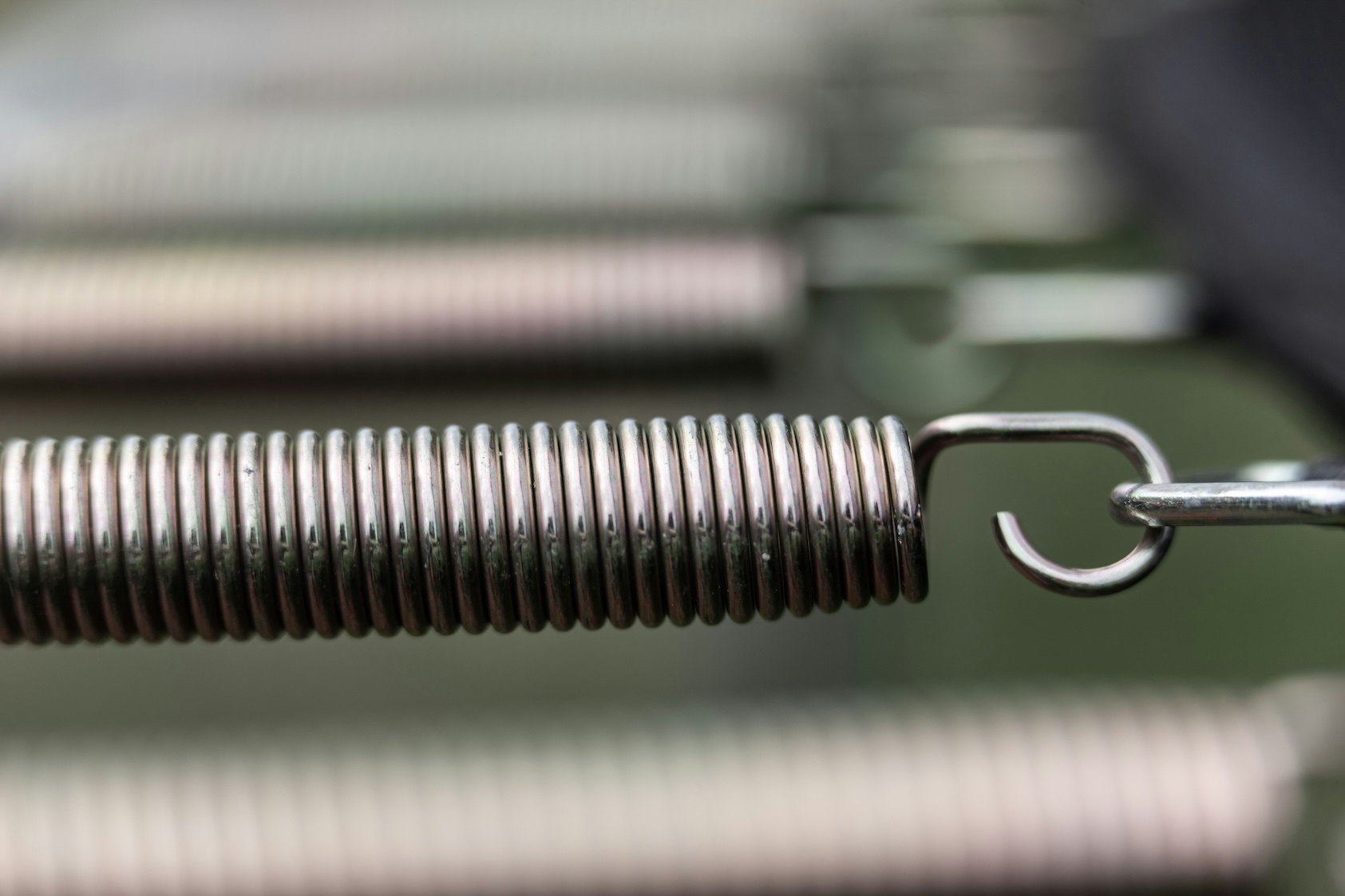
Hook formed on the side of the coil. The most common configuration.
Extension Springs

Hooks on Center

Hook centered on the spring axis for axial loading.
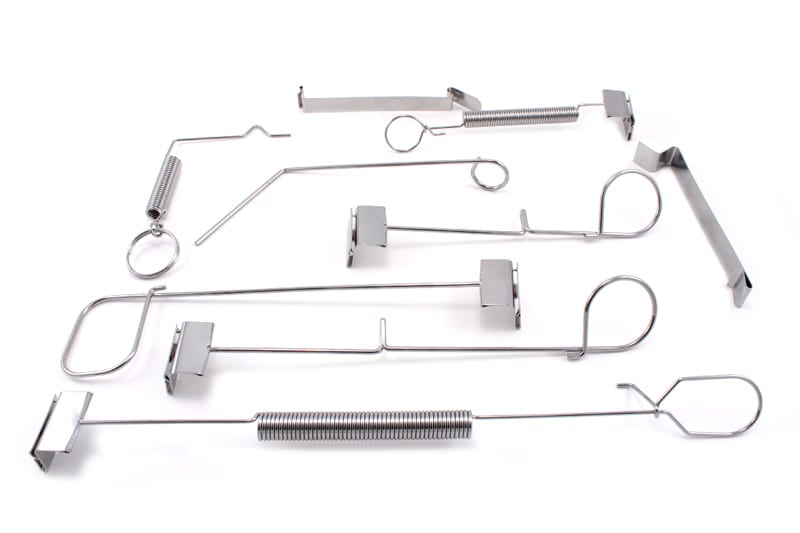
HVAC Filter Clips

Extended Hooks

Longer hook reach for assemblies needing greater attachment distance.

Custom Shaped Hooks

Specialty geometries engineered to your specific attachment requirements.
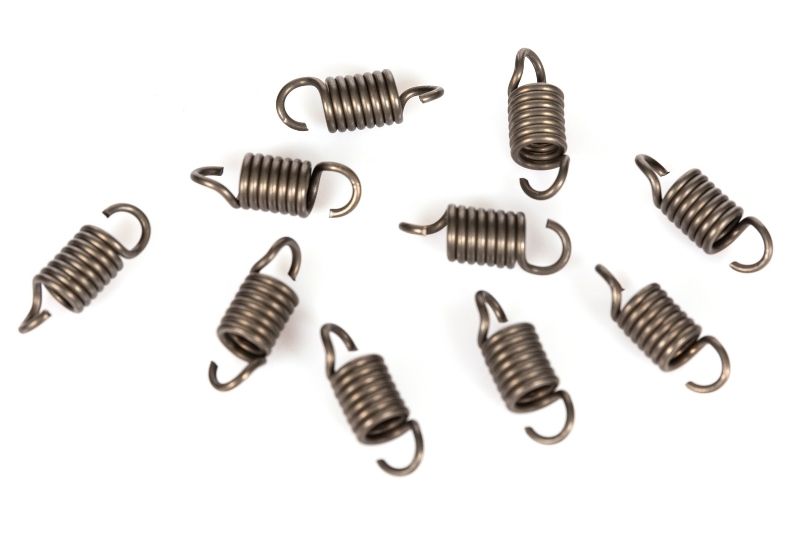
Extension Springs

Combination Hooks

Mixed hook styles on each end for non-symmetric assemblies.
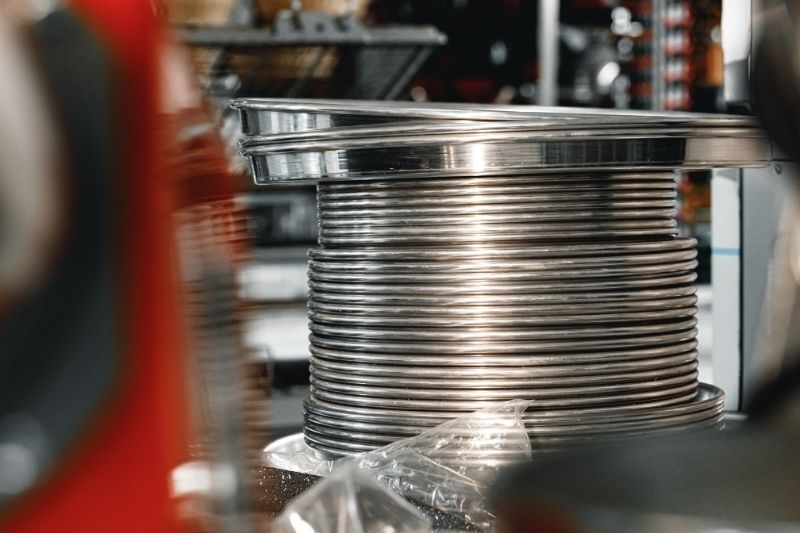
spring wire spools
Materials We Work With

The Right Material for Every Environment

We manufacture extension springs using a wide range of materials, selected based on load, corrosion resistance, temperature, and product lifecycle expectations.

Engineering Support

Custom Extension Spring Design

Our in-house engineering department can design springs to deliver the initial tension your application requires — and validate existing spring designs prior to manufacturing. Submit your design in any of the standard formats and we’ll respond with a manufacturable spec and a quote.

Trusted in Pull-Force Applications Worldwide

Industries Served

Our precision extension springs perform across demanding sectors — from garage door assemblies to medical devices and farm equipment.

Secondary & Finishing Services

Surface Treatment

Plating

Quality Control

Frequently Asked Questions

Extension springs are used in a variety of applications, including automotive, aerospace, medical devices, and industrial equipment. They are designed to resist stretching or pulling and are commonly used to return a component to its original position or provide tension in a system.

Extension springs can be manufactured from Beryllium Copper, Chrome Silicon, Chrome Vanadium, Elgiloy, Hard Drawn Wire, Hastelloy, Inconel, Monel, MP35N, Music Wire, Nitinol, Oil Tempered, Phosphor Bronze, Stainless Steel (17-7 SS, 302 SS, 304 SS, 316 SS, & 316L SS), and Titanium. The material used will depend on the specific application and the required performance characteristics of the spring.

There are several factors that should be considered when designing an extension spring, including the spring’s intended use, the desired spring rate, the material used, the amount of force required, and the available space for the spring.

The spring rate, also known as its extension rate, is a measure of the amount of force required to extend the spring by a certain distance. It is typically expressed in units of pounds of force per inch (lb/in) or Newtons per millimeter (N/mm). The spring rate of an extension spring is affected by a variety of factors, including the wire diameter, the coil diameter, the length of the spring, and the number of coils. The spring rate can be calculated using mathematical formulas that take into account these factors, as well as the material properties of the spring wire.

The maximum load an extension spring can handle will depend on several factors, including the material used, the wire diameter, and the spring’s dimensions. It is important to carefully consider the maximum load when designing an the spring to ensure that it will function properly and safely.

The manufacturing process typically involves coiling a wire around a mandrel, heat treating the spring to improve its strength and durability, and then forming the ends into loops or hooks to attach to the component or system.

Yes, we can manufacture custom springs to meet specific requirements for load capacity, spring rate, and other performance characteristics. Custom extension springs are typically designed using computer-aided design (CAD) software and are manufactured using specialized equipment and techniques. Learn more about manufacturing extension springs and their benefits.

Our Quality Management System is certified by ISO 9001:2015. We have the ability to provide specialized reports upon request, including First Article, PPAP inspections, material certificates, and Certificates of Conformance.

Need a custom extension spring? Let's talk specs.

Send us a drawing or a written spec — our engineers will respond with a manufacturable design and a quote, typically within two business days.