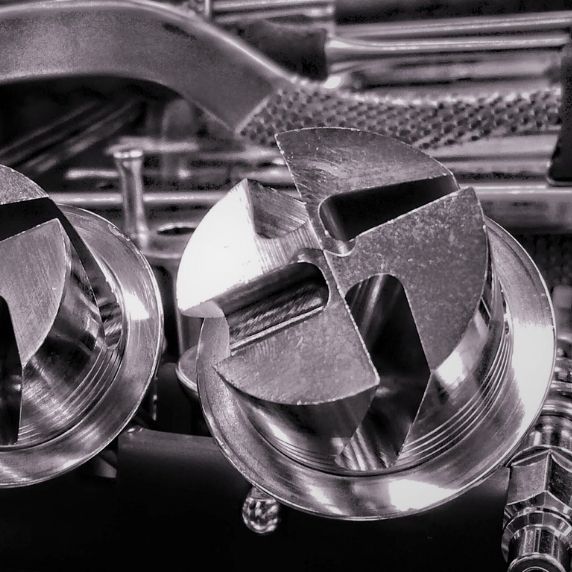
Precision Metal Stamping
Four-Slide & Press Stamping with 22-Ton Tonnage Capacity
Forming · Blanking · Piercing
Sheet Metal, Transformed to Spec
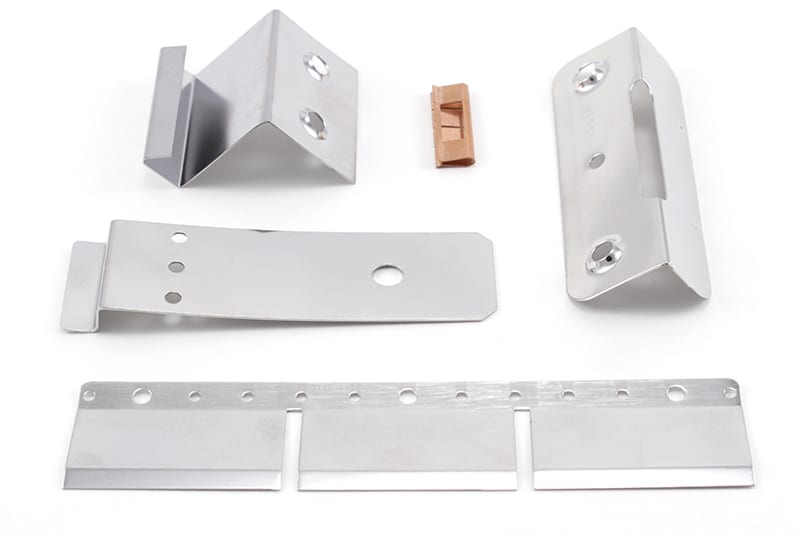
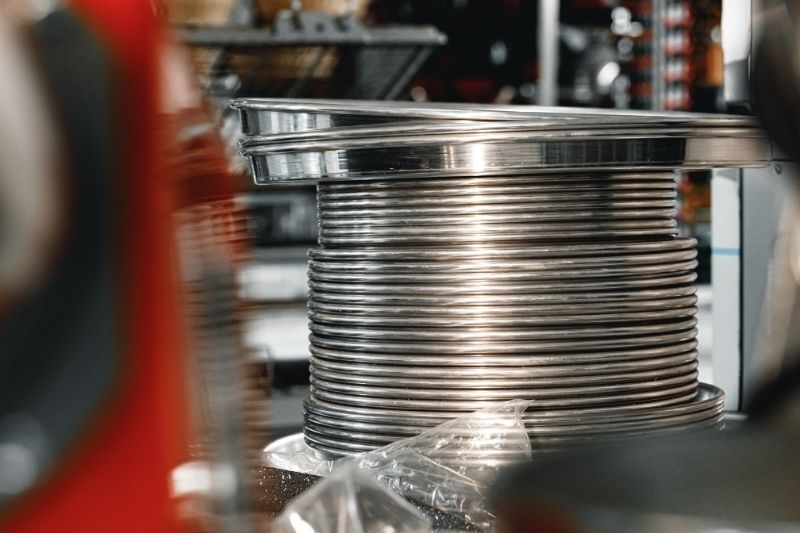
From medical devices to aerospace parts, precision metal stamping is a popular manufacturing process across many industries. Specialized machinery transforms blank or coiled sheet metal into custom shapes with a very high degree of design flexibility — down to minute features with strict tolerances.
At James Spring & Wire we run forming, blanking, and piercing operations on materials up to 0.093″ thick using high-speed four-slide machines and presses. With a maximum tonnage capacity of 22 tons, our equipment delivers accurate, repeatable stamping for stainless steel, copper, aluminum, and beyond.
Material Thickness
0.010″ – 0.093″
Up to 3″ width
Max Tonnage
22 Tons
Accurate, repeatable cycles
Equipment
Four-Slide Machines & Presses
In-house tooling fabrication
Certification
ISO 9001:2015
PPAP · SPC
Stamping Operations
Forming, blanking, piercing, embossing, and custom features — supported by in-house tooling fabrication
01
Blanking
Clean cut-out of part outlines from sheet stock as the first stamping step.
02
Piercing
Pierced holes, slots, and openings produced inline with the forming cycle.
03
Forming
Multi-axis bends and channels formed to tight tolerances under press tonnage.
04
Embossing
Raised features, dimples, and brand marks formed without removing material.
05
Custom Tooling
In-house tool & die fabrication for specialty stamped components and brackets.
Materials We Work With
The Right Material for Every Environment
We stamp a wide range of materials — from common carbon steels to copper alloys, aluminum, and exotic alloys like Inconel and Nitinol.
- Music Wire
- Oil Tempered
- Chrome Vanadium
- Phosphor Bronze
- Inconel
- Hastelloy
- Elgiloy
- Titanium
- Hard Drawn Wire
- Chrome Silicon
- Stainless Steel (17-7, 302, 304, 316, 316L)
- Beryllium Copper
- Monel
- MP35N
- Nitinol
Engineering Support
Design Verification & In-House Tooling Fabrication
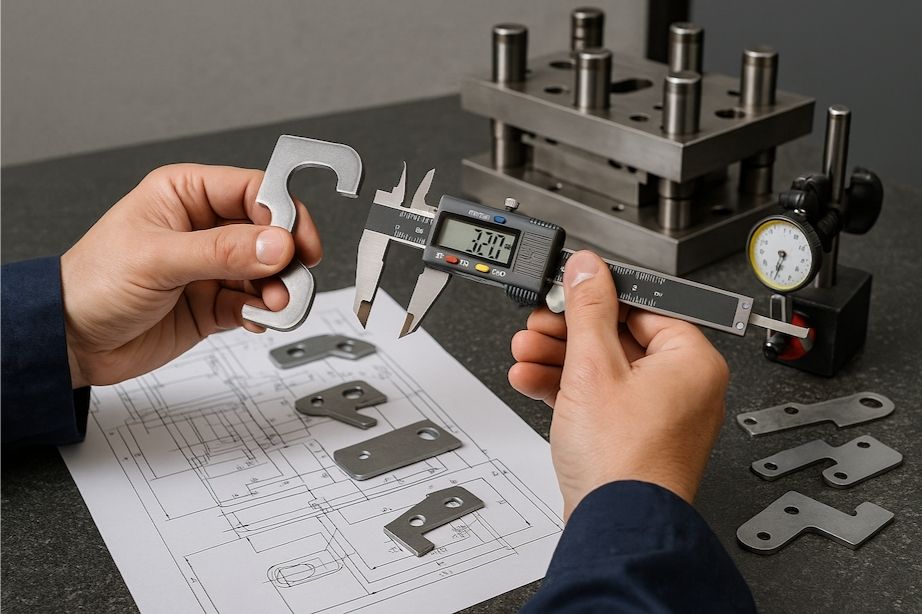
Our engineering team verifies existing customer stamping designs and provides design assistance for new parts. An in-house tooling fabrication service supports every stamping job, and we layer on quality control programs like SPC and full part certification — so what ships matches the drawing.
Metal Stampings Across Critical Industries
Industries Served
Our precision stampings appear in everything from medical devices and aerospace assemblies to industrial machinery and home goods.
Secondary & Finishing Services
Surface Treatment
- Anodizing
- Bead Blasting
- Citric & Nitric Passivation
- Cleaning – Conventional & Ultrasonic
- Color Coding
- Deburr – Vibratory & Tumble
- Electro Polish
- Laser Etching
- Powder Coating
- Rust Preventative
- Shot Peening
- Stress Relieving & Heat Treating
Plating
- Black Oxide
- Cadmium
- Chrome
- Gold
- Nickel
- Phosphate
- Tin
- Zinc
Quality Control
- Material & Part Certifications
- Production Part Approval Process (PPAP)
- Statistical Process Control (SPC)
- ISO 9001:2015 Registered
Frequently Asked Questions
Precision metal stampings are used in a wide variety of applications, from electronics and medical devices to automotive and aerospace components. They are often used to create small, complex parts with high accuracy and consistency.
Precision metal stampings can be manufactured from a variety of materials, including Aluminum, Beryllium Copper, Brass, Bronze, Copper, Elgiloy, Hastelloy, High Carbon Steel, Inconel, Low Carbon Steel, Monel, MP35N, Nitinol, Phosphor Bronze, and Stainless Steel (17-7 SS, 302 SS, 304 SS, 316 SS, & 316L SS). The material used will depend on the specific application and the required performance characteristics of the metal stamping.

There are several factors that should be considered when designing a precision metal stamping, including the stamping’s intended use, the desired accuracy and consistency, the material used, and the available space for the metal stamping.
The manufacturing process for precision metal stampings typically involves using specialized equipment, such as a stamping press or a progressive die, to form and cut metal sheets into the desired shape. The metal sheets are often subjected to various heat treatments and finishing processes to improve their strength, durability, and corrosion resistance. Learn more about precision metal stamping techniques.
Yes, precision metal stampings can be manufactured to meet specific requirements for size, shape, accuracy, and other performance characteristics. We perform forming, blanking, and piercing on materials of up to 0.093″ in thickness. Precision metal stampings are manufactured using specialized equipment and techniques, including fourslide machines and stamping presses. Our in house tool and die shop is available to create custom tooling to bring your designs to life.
The lead time for manufacturing precision metal stampings will depend on the complexity of the stamping, the quantity required, and other factors. Most precision metal stampings can be manufactured within 4-6 weeks.
Yes, precision metal stampings can be manufactured in large quantities using automated production processes and our high speed fourslide machines. This allows for high-volume production while maintaining consistent quality and precision.
The lead time for manufacturing compression springs will depend on the complexity of the spring, the quantity required, and other factors. We can manufacture most compression springs within 4–6 weeks.
As precision metal stamping manufacturers we use a variety of quality control measures to ensure that the metal stampings meet the required specifications and performance standards. To ensure the highest quality, we have various quality control programs in place, including statistical process control (SPC) and part certification. Verification of existing customer designs on stampings and design assistance according to your stamping requirements are also provided.
Need a precision metal stamping? Let's talk specs.
Send us a drawing or a written spec — our engineers will respond with a manufacturable design and a quote, typically within two business days.