

What is ITAR Compliance?
Knowing and understanding the answer to these questions is important for any company involved in government contracting and international trade that’s related to the defense industry, whether directly or indirectly. Though not well known by firms outside of government contracting circles, ITAR is the acronym for International Traffic in Arms Regulations, which are a set of regulations overseen by the United States Department of State that apply to the manufacture and transfer of defense products, defense services, or related technical data (to read the law in full, see 22 Code of Federal Regulations [CFR], Chapter I, Subchapter M, Parts 120–130).
What Impact Does ITAR Have on U.S. Manufacturers and Companies?
Essentially, ITAR is a set of export control regulations intended for businesses selling, producing, or distributing products that have defense-related or national security-related applications. In short, the regulations impose license requirements on exports and re-exports for items subjected to its jurisdiction in relation to defense services.
The jurisdiction is far-reaching. All companies that manufacture, sell, or distribute goods or services found under the United States Munitions List (USML) or the Missile Technology Control Regime (MTCR)—products and materials, brokers of defense articles, intellectual properties, related technical data, and software—are subjected to ITAR licensing and registration with the Directorate of Defense Trade Controls (DDTC), the administrating oversight body within the State Department.
ITAR regulations control items on the USML or the MTCR that apply to any items or products intended for defense-related applications or military end-use. Compliance with ITAR comes into play for manufacturers, sellers, and distributors when a customer orders items subjected to ITAR classifications. In order to fulfill the request, the producer, seller or distributor must prove that they are registered with the DDTC and are ITAR compliant. Companies must fill out an annual application to receive or renew ITAR compliant certification that explains what types of defense-related activities they are engaged in or what their role will be, and pay a registration fee.
Even though it may not be widely known, ITAR is still an area of regulation vital to government contracting firms. Originally developed to regulate military products and services, ITAR now covers a broad array of products and services listed under USML’s varied and diverse listings related to all defense industry product service lines. Therefore, more than just manufacturers, sellers, or distributors of goods or services covered under the USML, in order to provide fulfillment of products to manufacturers, third-party component suppliers of parts and goods covered under the USML must be ITAR certified and compliant as well.
James Spring & Wire Company & ITAR Compliance
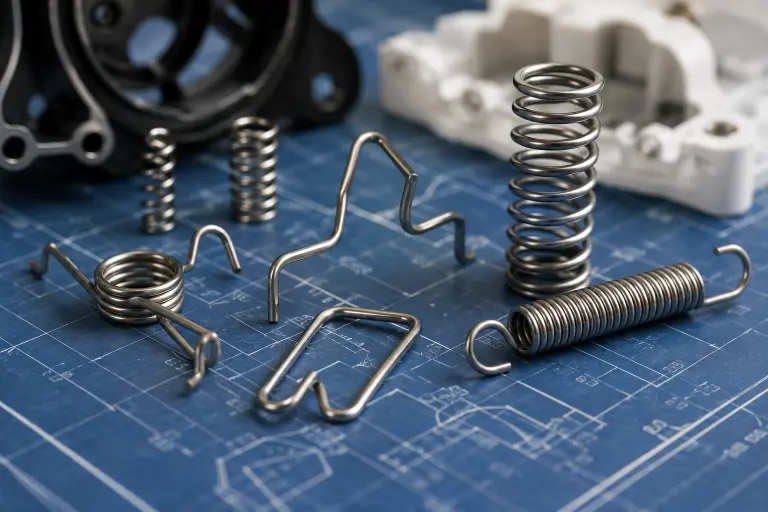
At first glance, it may seem otherwise, but a good example of a third-party supplier would be James Spring & Wire Company, manufacturers of springs, wire forms, stampings, and subassemblies. Though the prime contractors that James Spring sells to are certainly ITAR compliant, it’s just as important that they and such companies in the defense supply chain are as well. Every upstream company which supplies parts, components, products, and services used by prime contractors in the defense sector is subject to ITAR regulations.
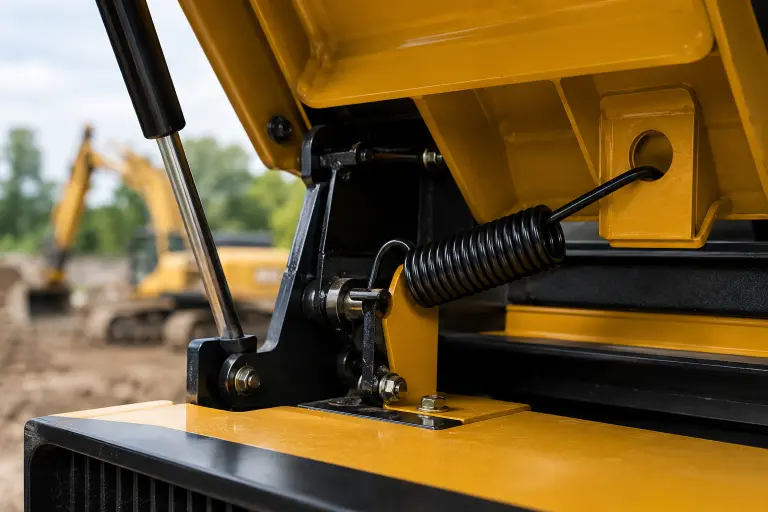
Any engineer, designer, or regular reader of this blog knows that springs are integral components found in nearly every mechanical object. With regard to ITAR, that would include parts and components used in critical military applications. Custom springs are designed for a wide range of military and defense-related systems, equipment, and vehicles. Springs are found in aircraft and aircraft carriers, and in military vehicles like tanks, Armored Personnel Carriers, Armored Fighting Vehicles, drones, and humvees. Springs are used in communication devices and security systems, in every type of firearm assembly, in missile systems, submarines, satellites, and so forth.
Importance of ITAR Compliance in Manufacturing
Finally, whether a company is a prime contractor in defense-related or national security-related applications or a third party supplier like James Spring & Wire Company for a contractor, ITAR compliance is in place to safeguard sensitive government information. It safeguards companies from any significant risks associated with non-compliance with regulations, with non-compliant companies facing civil fines upwards of $500,000 and criminal penalties of up to $1 million.
ITAR is a set of export control regulations overseen by the United States Department of State (DOS) that can pose a number of challenges for any companies or corporations involved in defense and military-related technologies under the USML. Knowing and understanding what ITAR means is the best way to ensure compliance. In that light, James Spring & Wire Company is a registered spring and wire form manufacturer with the DDTC and is ITAR compliant, offering exceptional high-quality products and providing outstanding service to each and every customer.