
Automotive systems rely on thousands of engineered mechanical components working in precise coordination. Among the most critical—yet often overlooked—are springs and wire forms that control movement, maintain force, and ensure reliable mechanical function throughout a vehicle’s lifecycle.
 For automotive OEMs and Tier suppliers, spring components must meet strict requirements for fatigue resistance, dimensional tolerance, corrosion protection, and repeatable manufacturing quality. Even small variations in spring performance can affect safety systems, mechanical assemblies, and overall product reliability.
Precision spring manufacturers support automotive engineering teams by delivering components designed for long-cycle durability, consistent force characteristics, and compatibility with demanding operating environments.
How Springs Function Within Automotive Systems
Springs serve multiple roles across vehicle assemblies, controlling motion, maintaining tension, and returning mechanisms to their intended positions. Automotive engineers rely on spring components to ensure predictable mechanical behavior in systems that experience vibration, heat, and repeated cycling.
Common automotive spring functions include:
- Maintaining controlled tension or compression within assemblies
- Absorbing vibration and mechanical shock
- Returning moving components to neutral positions
- Holding parts in alignment under dynamic loads
- Providing controlled mechanical resistance
Because many automotive mechanisms operate thousands—or millions—of cycles over a vehicle’s service life, fatigue performance becomes one of the most important design considerations.
Common Types of Springs Used in Automotive Applications
Different automotive systems require different spring configurations depending on space constraints, force requirements, and movement patterns.
Compression Springs
Compression springs resist compressive forces and return to their original length when the load is removed. They are widely used throughout vehicle assemblies where controlled resistance or energy absorption is required.
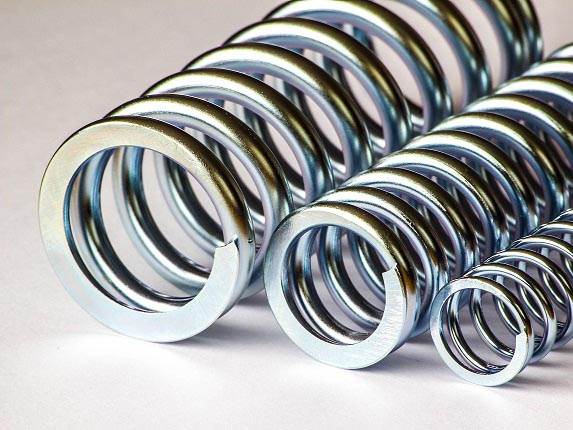 Typical automotive uses include:
- Valve assemblies
- Suspension systems
- Brake components
- Seating mechanisms
- Electrical connectors
Learn more about compression spring manufacturing and how they support automotive assemblies.
Extension Springs
Extension springs store energy when stretched and are designed to return components to their original position once tension is released.
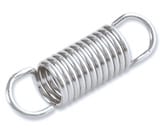 Common automotive applications include:
- Door mechanisms
- Interior hardware systems
- Trunk assemblies
- Seat mechanisms
These springs often incorporate hooks or loops that integrate directly into mechanical linkages.
Torsion Springs
Torsion springs operate through rotational force and are frequently used in hinged or pivoting automotive systems.
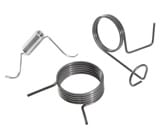 Typical applications include:
- Door handles
- Throttle linkages
- Pedal return systems
- Interior mechanical components
The rotational force characteristics of torsion springs make them well-suited for assemblies requiring controlled rotational movement.
Wire Forms
Wire forms are custom-shaped metal components that perform structural or mechanical support roles within assemblies. Unlike traditional springs, wire forms are often engineered to hold parts in place, guide movement, or serve as retention clips.
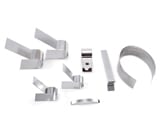 Automotive wire form applications may include:
- Retention clips
- Brackets
- Assembly supports
- Fastening components
Wire forms are commonly designed to integrate directly into complex OEM assemblies.
Engineering Considerations for Automotive Spring Design
Automotive springs must perform reliably under challenging conditions, including temperature fluctuations, vibration, and repeated mechanical cycling. Engineers evaluate several critical factors when designing spring components.
Fatigue Life
Fatigue life determines how many cycles a spring can perform before failure occurs. Automotive springs must often endure hundreds of thousands—or millions—of load cycles over a vehicle’s lifespan.
Design factors influencing fatigue life include:
- Material selection
- Stress levels during operation
- Surface finish and heat treatment
- Environmental exposure
Material Selection
Material choice plays a significant role in spring performance and durability. Automotive applications often require materials capable of maintaining strength under dynamic loading and varying environmental conditions.
Common spring materials include:
- Music wire for high-strength applications
- Oil-tempered wire for durability under repeated stress
- Stainless steel for corrosion resistance
- Specialty alloys for extreme environments
Each material offers different advantages depending on the application requirements. Learn more about material selection.
Tolerance Control
Automotive OEMs require precise dimensional tolerances to ensure consistent performance across large production runs. Small deviations in wire diameter, coil geometry, or free length can affect spring load characteristics.
Precision manufacturing processes and quality control systems help ensure repeatable spring performance across high-volume production.
Surface Finishing and Corrosion Protection
Automotive components are frequently exposed to moisture, road salts, and temperature fluctuations. Surface treatments can significantly extend the lifespan of spring components.
Common finishing processes include:
- Zinc plating
- Phosphate coatings
- Passivation for stainless materials
- Shot peening to improve fatigue strength
Proper finishing helps maintain mechanical integrity while protecting springs from corrosion and environmental damage.
Manufacturing Quality and Documentation for Automotive OEMs
Automotive suppliers must meet strict quality assurance standards. Precision spring manufacturers often support OEMs with documented quality processes and traceable production controls.
Key quality considerations include:
- Material traceability
- Dimensional inspection protocols
- Lot tracking and documentation
- Process control during production runs
These quality systems help ensure that each spring meets the performance requirements of the final assembly.
Supporting Automotive Manufacturers With Engineered Components
Automotive manufacturers depend on suppliers capable of producing reliable, repeatable mechanical components at scale. Precision springs and wire forms must integrate seamlessly into complex assemblies while maintaining consistent performance across millions of cycles.
Working with experienced manufacturers helps engineering teams optimize spring design for performance, durability, and manufacturability.
Learn more about how precision springs support automotive manufacturers in the Automotive Industry Applications section.
Frequently Asked Questions
What types of springs are most commonly used in automotive manufacturing?
Compression, extension, and torsion springs are widely used across automotive systems. Wire forms are also common for clips, brackets, and mechanical retention components.
How important is fatigue resistance for automotive springs?
Fatigue resistance is critical because many automotive components cycle repeatedly during normal vehicle operation. Springs must maintain consistent force characteristics over long service lifespans.
What materials are typically used for automotive spring manufacturing?
Common materials include music wire, oil-tempered wire, stainless steel, and specialty alloys selected based on strength, corrosion resistance, and fatigue performance.
Why are tolerance controls important for automotive springs?
Precise tolerances ensure consistent load performance and predictable mechanical behavior across high-volume production runs used in automotive assemblies.
How do engineers determine the correct spring type for an automotive application?
Engineers evaluate the direction of force, required load characteristics, available space, and expected cycle life. Compression springs are typically used where force must resist compression, extension springs provide tension between components, and torsion springs control rotational movement in hinged systems.
What factors influence the fatigue life of automotive springs?
Fatigue life depends on material selection, stress levels during operation, surface condition, and environmental exposure. Heat treatment, shot peening, and proper design geometry can significantly increase the number of cycles a spring can withstand before failure.
Why do automotive OEMs require tight manufacturing tolerances for springs?
Precise tolerances ensure consistent spring force, predictable mechanical behavior, and reliable performance across large production runs. Small dimensional variations can alter load characteristics and affect the performance of the overall assembly.
Conclusion
From powertrain systems to interior mechanisms, springs and wire forms play a vital role in the performance and reliability of automotive assemblies. Their ability to maintain force, control motion, and withstand repeated mechanical stress makes them essential components within modern vehicle design.
For automotive OEMs and Tier suppliers, precision manufacturing, material selection, and quality control all contribute to producing springs capable of meeting demanding automotive requirements. Working with an experienced spring manufacturer ensures that components are engineered for durability, repeatable performance, and seamless integration into complex assemblies. Contact the experts at James Spring today!

