
Matching Alloys to Application Demands
Choosing the right material for your springs is essential for ensuring their durability, performance, and longevity. Whether you’re designing springs for aerospace, automotive, or medical applications, the material you select must align with the specific demands of the operating environment. This handbook provides an in-depth guide on the properties of different spring materials and their suitability for various applications.
Material Overview
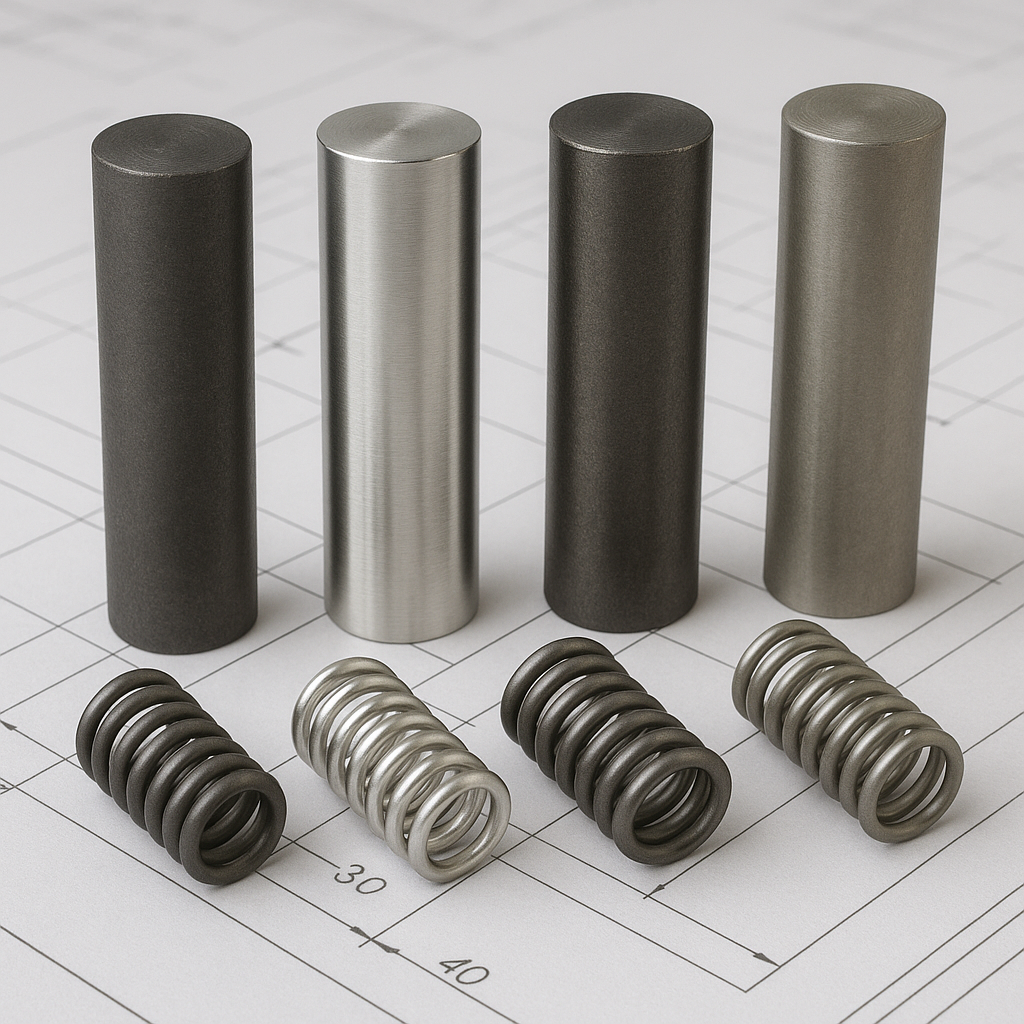 The material chosen for a spring must be durable, flexible, and able to withstand the forces it will encounter during use. Several factors play into material selection, including:
- Mechanical properties: Tensile strength, fatigue resistance, and elasticity.
- Environmental factors: Resistance to temperature extremes, corrosion, and chemicals.
- Manufacturing processes: Some materials are easier to form, coil, or heat-treat than others.
Common Spring Materials and Their Applications
Carbon Steel
- Properties: Excellent tensile strength, cost-effective, and versatile.
- Applications: Commonly used in general industrial springs, such as in automotive and industrial machinery.
- Best for: Low-cost applications where moderate strength and fatigue resistance are sufficient.
Stainless Steel
- Properties: High resistance to corrosion and excellent fatigue strength.
- Applications: Ideal for environments exposed to moisture or chemicals, such as in food processing, medical, and marine industries.
- Best for: Corrosive or high-humidity environments, as well as high-stress applications.
Alloy Steel
- Properties: Offers superior strength and toughness, can be heat-treated for high-stress applications.
- Applications: Used in aerospace, automotive, and heavy machinery springs.
- Best for: High-load and high-temperature environments, where strength is critical.
Inconel
- Properties: A high-performance alloy resistant to heat and oxidation.
- Applications: Aerospace, high-temperature gas turbines, and extreme environments.
- Best for: High-temperature and high-stress applications.
Titanium
- Properties: Lightweight with excellent strength-to-weight ratio, corrosion-resistant.
- Applications: Used in aerospace, medical implants, and high-performance engineering.
- Best for: Lightweight, corrosion-resistant applications with a need for durability.
How to Choose the Right Spring Material
When selecting the right spring material for your application, consider the following:
Temperature Resistance: Will the spring be exposed to extreme temperatures? Materials like Inconel and titanium perform better in high-heat applications, whereas stainless steel offers good performance in both hot and cold conditions.
Corrosion Resistance: Springs used in corrosive environments, such as marine or chemical processing industries, require corrosion-resistant materials like stainless steel or specialized alloys.
Mechanical Load: Will the spring undergo frequent compression or tension? Materials with high fatigue resistance like alloy steel or stainless steel are well-suited for these applications.
Manufacturing Considerations
Not all materials are easy to form or coil. The spring’s manufacturing process may influence material choice. For example, some materials like carbon steel are easier to coil, while more advanced alloys may require special tooling or heat treatment processes.
Advanced Spring Materials and Technologies
Metal Matrix Composites (MMC): Combining metal with other materials for superior strength and reduced weight. Often used in specialized aerospace applications.
Shape Memory Alloys: Alloys like Nitinol that can return to their original shape when heated, ideal for applications where springs need to function under varying environmental conditions.
Choosing the right spring material is a critical step in ensuring the longevity and functionality of your components. By understanding the unique properties of different materials, you can make informed decisions that will benefit your projects for years to come.
James Spring’s Expertise in Material Selection
At James Spring, we specialize in custom-designed springs using the highest-quality materials to meet your exact specifications. Whether you need a standard material or a custom alloy, we can help you select the best material for your unique application. Our products span industries such as aerospace, automotive, medical, and more.
For expert advice and high-quality custom springs, contact James Spring today.
