
Ensuring Optimal Performance and Longevity
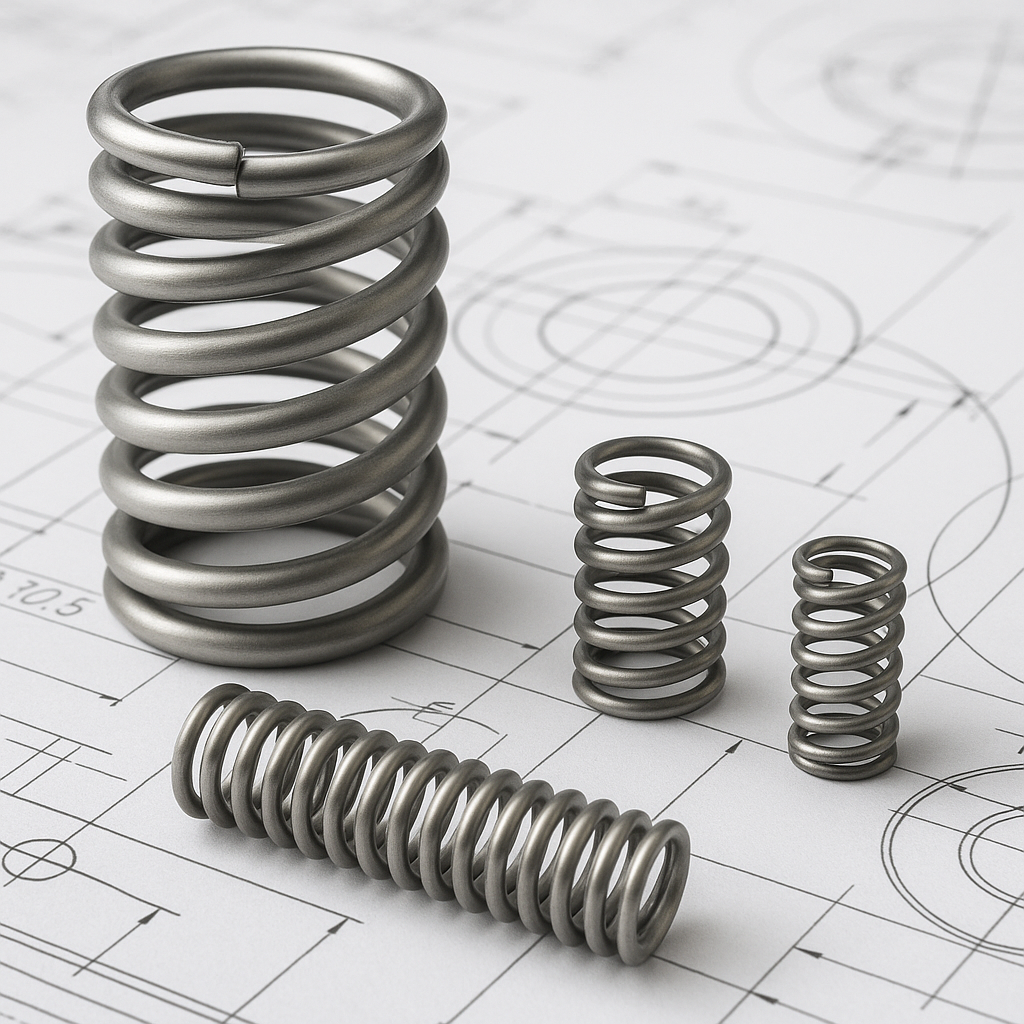 Designing a spring that meets performance and durability standards can be a complex task. Whether you are creating a compression, tension, or torsion spring, several factors need to be considered to ensure that your spring performs well in its intended environment and lasts for its desired lifespan. This checklist is designed to guide engineers through the spring design process, helping to reduce errors and streamline the development of high-quality spring components.
1. Understand Application Requirements
Before diving into material selection or manufacturing methods, it’s critical to fully understand the application where the spring will be used. Address the following:
- Load Type: Will the spring undergo tension, compression, or torsion?
- Operating Environment: Will the spring face extreme temperatures, humidity, or corrosive substances?
- End-Use Requirements: What is the critical function of the spring in your application (e.g., fatigue resistance, constant force, etc.)?
2. Material Selection
Choosing the right material is key to ensuring that the spring performs as intended. Check out our material selection guide for more information.
- Strength & Fatigue Resistance: Consider whether the material can withstand repeated stress without failure.
- Corrosion Resistance: Is the spring exposed to harsh environments, such as chemicals or saltwater?
- Temperature Tolerance: Does the spring need to perform under high or low temperatures? Materials like Inconel and titanium are ideal for extreme conditions.
3. Spring Geometry and Dimensions
Ensuring the right dimensions is essential for optimal spring performance. Here’s a checklist to guide your geometry design:
- Wire Diameter: Is the wire diameter large enough to handle the expected load but not so large that it reduces spring flexibility?
- Spring Length: Does the spring need to be compressed or extended to a specific length without failure?
- Coil Diameter: Ensure that the coil diameter is appropriate for your spring’s function and the space available.
- Free Length vs. Working Length: Confirm that the free length will allow for the proper amount of compression or extension without causing damage.
4. Stress & Strain Calculations
Verify the design’s mechanical properties by performing stress and strain calculations. This will help ensure that the spring:
- Can handle the required load without permanent deformation.
- Maintains elasticity over its operational lifespan.
5. Fatigue Resistance
Springs undergo repeated loading and unloading cycles. Fatigue resistance is vital to ensuring longevity and optimal performance. Use the following guidelines:
- Stress Relaxation: Does the material exhibit minimal stress relaxation under prolonged use?
- Cycles to Failure: Estimate how many cycles the spring can undergo before failure. Springs in high-use applications, such as automotive or aerospace, require materials and designs that maximize cycle life.
6. Manufacturing Considerations
Designing a spring is only part of the equation; the manufacturing process plays a critical role in ensuring performance and durability.
- Fabrication Method: Will the spring be wound, coiled, or formed? Select the method based on material properties and application needs.
- Heat Treatment: Will the spring require heat treatment to improve its strength or fatigue resistance?
- Surface Treatments: Consider surface coatings or treatments to improve wear resistance, corrosion resistance, or fatigue life.
7. Quality Control and Testing
To ensure that your spring design meets expectations, it is essential to implement a robust quality control process. This may include:
- Load Testing: Confirm that the spring can handle the expected load.
- Dimensional Testing: Verify that the spring meets all the dimensional specifications and tolerances.
- Fatigue Testing: Perform fatigue testing to evaluate how the spring performs under repetitive loading cycles.
8. Consider Environmental Factors
- Corrosion Protection: Consider plating or coatings like zinc or nickel to protect against corrosion.
- Temperature Considerations: Use temperature-resistant materials, such as stainless steel or Inconel, in high-heat environments.
9. Prototype and Iteration
Before mass production, it’s crucial to build and test prototypes. This will allow you to identify any potential issues and refine the design based on real-world performance.
- Prototyping Process: Use rapid prototyping or 3D printing technologies if necessary to quickly assess your design.
- Feedback Loop: Gather feedback from testing and make adjustments to optimize performance.
10. Documentation & Specifications
Ensure that all design specifications, material choices, testing results, and quality control measures are properly documented. This will provide a reference for future design modifications and manufacturing runs.
- Design Drawings: Provide detailed 2D or 3D design drawings, including all critical dimensions and material choices.
- Material Specifications: Include detailed specifications for the selected spring material.
- Testing Protocols: Document the testing methods used to verify performance and durability.
By following this checklist, you can streamline your spring design process, reduce errors, and ensure that your springs perform optimally throughout their lifespan. Whether you’re designing a spring for automotive, aerospace, or medical applications, our guide will help you create springs that meet the toughest performance and durability standards.
James Spring’s Expertise in Spring Design and Production
At James Spring, we are committed to providing high-quality, precision-engineered springs designed to meet your exact specifications. After your spring is designed, our team of experts is here to guide you through every step of the process—from material selection to quality control—to help ensure your design performs at its best.
Already have a design ready? Contact James Spring today to speak with our experts and bring your spring to life with customized, reliable solutions.
